
Ranthambore National Park is considered one of the best places to sight tigers in India, and rightly so. It captures the raw beauty of the wilderness in its purest form, like very few places do.
How We Reached Ranthambore National Park
Ranthambore National Park is located in Sawai Madhopur and is easily accessible by train and road. One can also fly to nearby cities like Jaipur or Udaipur and continue the journey by road.
We chose the direct Pune–Jaipur SF Express, which runs every Wednesday and takes around 14 hours. It was a comfortable overnight journey and a convenient way to reach Rajasthan.
Booking a Safari in Ranthambore
When it comes to booking a safari in Ranthambore, timing and zone selection make all the difference. The park offers two safari slots, one in the morning and one in the afternoon. However, the real game-changer is the zone you choose.
Among all the zones, Zone 3 and Zone 4 are known to offer higher chances of spotting tigers, which is why they sell out almost two months in advance. Our entire trip revolved around securing a 6:30 AM morning safari in Zone 3. After days of checking availability and planning, we were lucky enough to get exactly that.
The tickets cost us around ₹1000 per person, and the safari was worth every rupee we spent.
If you want a detailed step-by-step guide on how to book Ranthambore safari tickets, including zone selection and the official booking website, I have shared a step-by-step guide that walks you through the entire process.
Arrival at Sawai Madhopur and Our Stay
Our train left Pune at 5:30 PM, and the excitement of the trip had already started to sink in. We were joined by our cousin’s family from Mumbai, which made the journey even more lively. The night passed with laughter, conversations, snacks, and those classic railway moments.
We arrived at Sawai Madhopur early the next morning and checked into the Ranthambore Palace. It was a budget-friendly, clean, and conveniently located stay just minutes away from the national park. One of the biggest advantages was that safari guides could directly pick us up from the hotel, saving us the early-morning hassle.
After freshening up and shaking off the travel fatigue, we stepped out for a bit of local sightseeing to begin our Ranthambore adventure.
The Morning Safari Begins
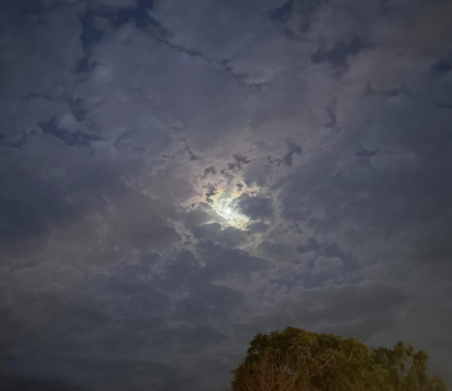
We woke up at 5:00 AM, dressed in muted forest colors, and waited for our guide. The sky was still dark and cold, with the moon hanging softly above us.
The guide arrived at 6:15 AM. After document checks, we boarded the canter along with around ten to twelve other travellers. As we moved toward Ranthambore National Park, the excitement was unmistakable. This was our first wildlife safari experience, and the only hope we carried was that we would get to see the tiger.
Both our families were assigned different vehicles, as they were going to Zone 4. We met at the park gate, where we shared our byes and good luck and went on our own paths.
Inside Zone 3 of Ranthambore National Park
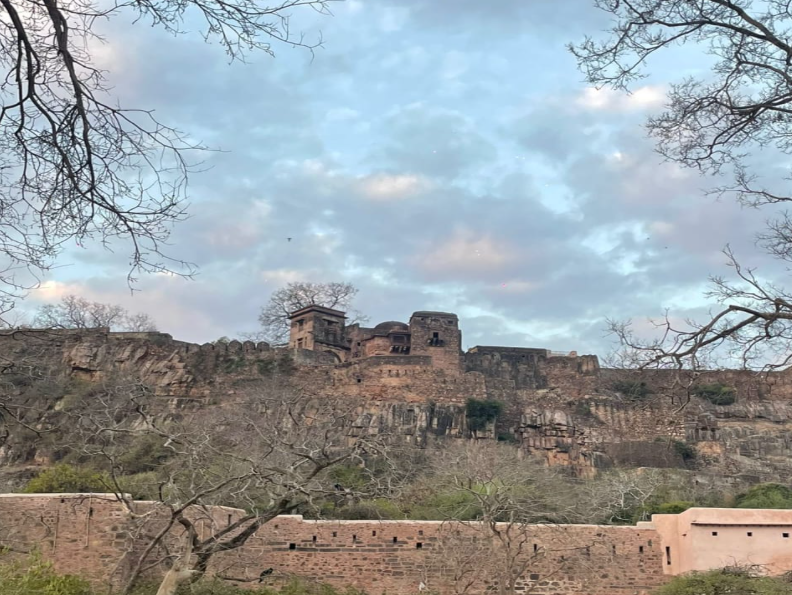
Within five to seven minutes, we reached the main gate of Zone 3 and were welcomed by a breathtaking sight. Around ten to twelve peacocks were perched near the Ranthambore Fort, which marks the starting point of the zone. It felt like a majestic beginning to the day.
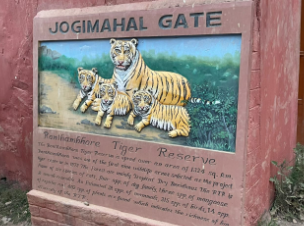
A little ahead of the Jogi Mahal gate, we reached a spot where the famous tigress Riddhi and her cubs are often seen. They were not around at that hour, but the energy of the place was unmistakable.
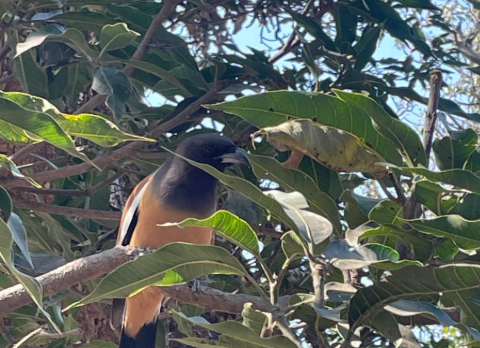
We waited there for a while and were soon joined by another species, the rufous treepie. These birds were incredibly friendly and curious, flying over our heads and hopping onto the sides of our vehicle as if they were welcoming us into their world.
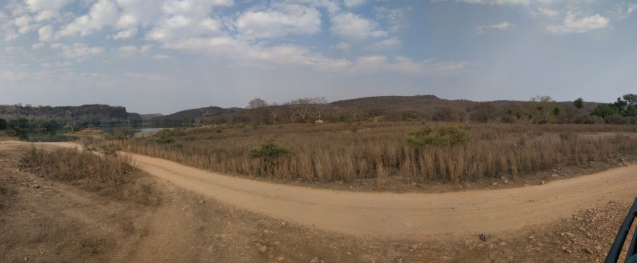
Zone 3 is often considered the most beautiful safari route in Ranthambore National Park, and it truly lives up to its reputation. The route is blessed with Padam Lake, the historic Jogi Mahal, and stunning views of the Ranthambore Fort.
At this point, I was so mesmerized by the surroundings that I almost forgot we were there to spot a tiger.
As we moved deeper into the forest, our canter suddenly slowed down. A pair of deer crossed our path, and my heart jumped instantly. For a moment, it felt like they were running from a tiger, but they were simply running freely in the joy of the morning.
A little ahead, we heard our first call of the safari.
What’s a call?
A call refers to the warning sounds made by birds or animals when they sense the presence of a predator nearby.
Our guide immediately changed direction and drove toward the call at full speed. Soon, every other vehicle in the zone was racing down the same trail. It felt less like a safari and more like a shared mission to spot the tiger.
We reached the spot with several other vehicles, but there was no sighting. The tiger had either moved deeper into the forest, or the call had been a false alarm. Even so, the thrill of that chase set the tone for the rest of the morning.
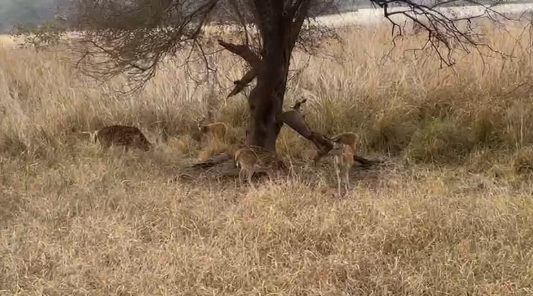
We started moving further in the forest. Every few kilometers we spotted peacocks, deer, and monkeys. We often find these species in the zoo, but it was humbling to watch them in their natural habitat—unconfined, unbothered, wandering freely, and just going about their lives!
But the more relaxed the animals looked, the clearer it became that a tiger wasn’t nearby. So instead of chasing expectations, we decided to soak in the jungle’s calm while waiting for another call from the predator.
A little further along, our trail curved beside a calm lakeside, and that’s where we spotted, not a tiger, but another predator species, crocodiles! They were lying lazily along the bank, almost like sunbathing crocodiles soaking in the warm morning light. In the distance, we could see a wild pig and a few peacocks inching toward the water, probably waiting for the safest moment to quench their thirst. Nature’s silent tension—everyone alert, everyone waiting.
The Roar That Changed Everything
We were halfway through the safari and slowly losing hope when we received another call. Once again, we rushed toward it with racing hearts. Peacocks suddenly took flight in one direction, and our guide instinctively followed. But once more, there was no sighting.
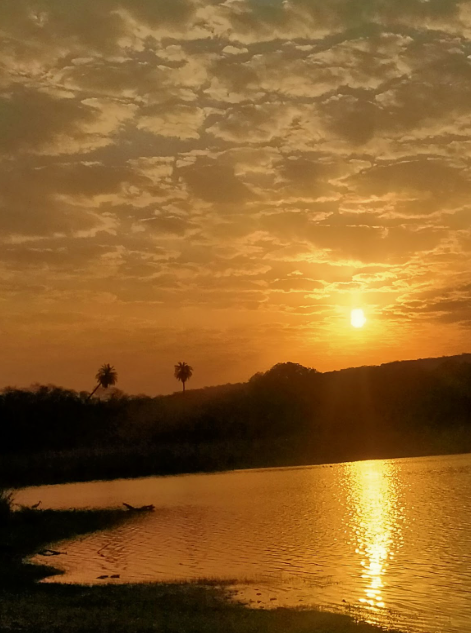
Eventually, we parked near the main lake area of Zone 3, one of the most beautiful spots of the entire safari. The sun had risen high enough to paint everything in warm shades of gold and orange. The still lake reflected the sky, and an old mahal-like structure stood quietly in the middle, adding a royal touch to the landscape.
Birds chirped around us, and peacocks and deer gathered in small clusters around the lake. We even met the friendly birds again and started playing with them.
Everyone had made themselves busy enjoying the moment. I captured the scene on my phone and then simply sat back, watching people experience the view from every direction. It felt as if time had slowed down, and maybe this is what true peace looks like: a quiet morning beside a lake, far from the noise of urban life.
I had completely lost myself in that moment—and that’s when we heard it! The roar.
Not a sighting.
Just a roar.
A deep, powerful roar echoed across the lake and froze everything in place. The forest fell silent. My heart raced, my stomach turned, and goosebumps covered my arms. It was only a sound, just the possibility of a sighting, yet it shook everyone to the core.
That roar was all we got. We waited with our eyes fixed on the treeline, hoping the tiger would step out just once, but it never did. I kept wondering what I would do and how I would react if the tiger actually walked into view, ruling its home with quiet confidence. Even now, thinking about that moment gives me goosebumps.
There were a few more calls that took us to the far corners of Zone 3, but luck was not on our side that morning. Spotting a tiger in a single safari is rare, and most people need at least two safaris to catch even a glimpse.
With our guide, we decided to spend the last few minutes by the lake on our way out. A tigress had been spotted drinking water there just a day earlier, but she was not there that morning. So we simply sat quietly, breathed in the calm, and began making our way toward the exit.
The jungle is not just a place—it’s a feeling! Indeed it is. It is a humble feeling that no matter how much progress we make as humans, what we invent, and where we go, we will always come back to it. We can’t grow bigger than it—the jungle, nature, and everything within it.
As we neared the gate, there was a small ache for not spotting the tiger. At the same time, I felt deeply grateful for the experience. It had been one of the most beautiful mornings I have ever experienced. The layered landscapes of the jungle, the animals wandering freely in their home, and us gently peeking into their world felt magical in the quietest way.
This morning in Ranthambore will always remain one of the most special chapters of my travel journey, wherever it takes me next.
 Girl With A Pla
Leave a comment